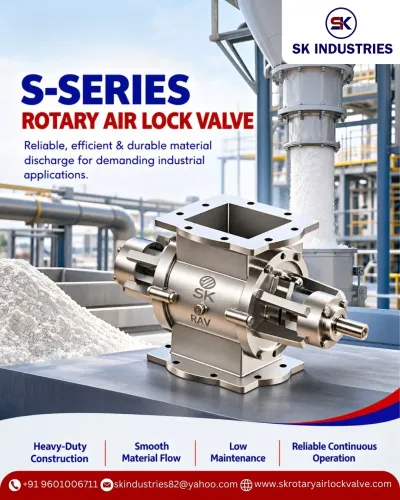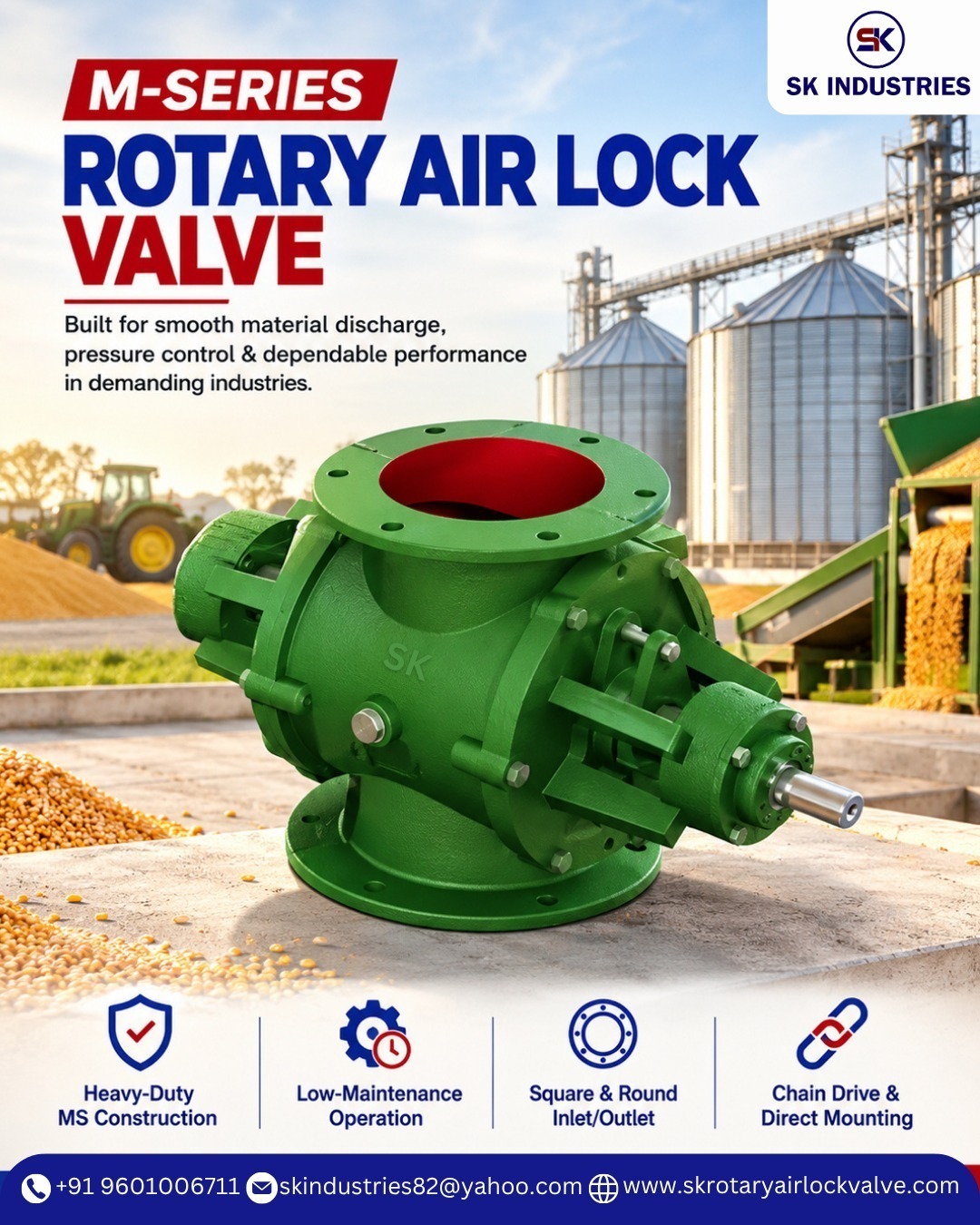
Industries that handle bulk materials need efficient equipment to maintain smooth, controlled, and reliable material flow. M-Series Rotary Airlock Valves play an important role in pneumatic conveying systems, dust collection equipment, and industrial material handling applications. These valves regulate the discharge of powders, granules, and other dry bulk materials while helping maintain pressure differences between connected equipment.
For businesses searching for M-Series Rotary Airlock Valves in Ahmedabad, choosing the right equipment can help improve material flow, reduce product loss, and support consistent industrial operations. These valves are used across cement plants, food processing facilities, chemical industries, pharmaceutical manufacturing, and power plants.
SK Industries focuses on industrial material handling solutions designed to meet different application requirements. In this blog, we explain how M-Series Rotary Airlock Valves work, their benefits, industrial applications, and the important factors to consider when selecting a suitable valve.
What Are M-Series Rotary Airlock Valves?
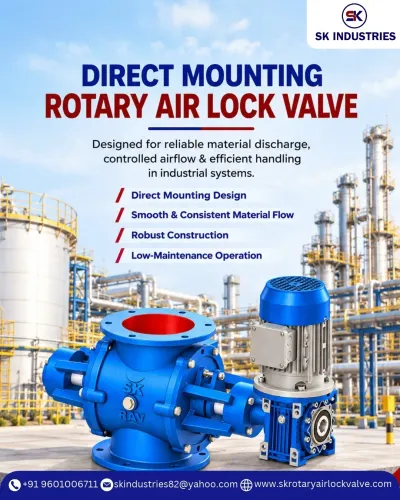
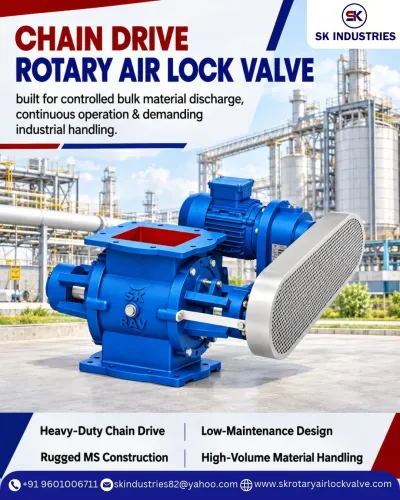
M-Series Rotary Airlock Valves are industrial rotary feeders designed to control the transfer of bulk materials between connected equipment. They generally consist of a rotating rotor with multiple pockets housed inside a stationary casing. As the rotor turns, material enters through the inlet, moves within the rotor pockets, and discharges through the outlet.
These valves help transfer materials between equipment operating at different pressures while limiting unwanted air leakage. This makes them particularly useful in pneumatic conveying systems, hoppers, silos, bag filters, and dust collection units.
Depending on their design and configuration, rotary airlock valves can handle materials such as cement, fly ash, grain, plastic pellets, industrial powders, and dry granules.
Businesses looking for M-Series Rotary Airlock Valves in Gujarat should consider the material characteristics, required capacity, operating pressure, temperature, and compatibility with existing equipment before selecting a valve.
How Do M-Series Rotary Airlock Valves Work?
An M-Series Rotary Airlock Valve operates on controlled rotary movement. The rotor rotates inside the housing, collecting and transferring material through a series of pockets.
The operating process generally includes the following steps:
- Material enters the valve: Bulk material flows from a hopper, silo, or dust collector into the valve inlet.
- Rotor pockets collect material: The rotating rotor captures material in its individual pockets.
- Material moves through the housing: The rotor carries the material from the inlet toward the discharge point.
- Controlled discharge occurs: Material exits through the outlet and moves to the next stage of the process.
- Air leakage is restricted: Clearances between the rotor and housing limit unwanted air movement between connected equipment.
The actual performance depends on rotor design, operating speed, material properties, pressure differential, and manufacturing tolerances.
Key Benefits of M-Series Rotary Airlock Valves
1. Efficient Bulk Material Handling
M-Series Rotary Airlock Valves support the controlled transfer of dry bulk solids between different stages of industrial processes. Their continuous rotary motion helps maintain a steady material feed and supports efficient production.
2. Improved Pressure Management
Rotary airlock valves help limit air leakage between connected equipment, supporting pressure control in pneumatic conveying and dust collection systems. Proper valve selection is essential for achieving the required performance.
3. Reduced Material Loss
A suitable rotor and housing design can help control material movement and reduce leakage. Correct installation, appropriate operating conditions, and regular maintenance further support efficient material handling.
4. Reliable Industrial Operation
When selected to match application requirements, rotary airlock valves provide consistent material discharge and reduce interruptions caused by unsuitable equipment or excessive wear.
5. Versatile Material Handling Applications
These valves can be configured for different dry bulk materials and industrial processes. The appropriate design depends on particle size, abrasiveness, moisture content, temperature, and required throughput.
6. Effective Dust Collection Support
M-Series Rotary Airlock Valves are commonly installed beneath bag filters, dust collectors, and cyclone separators. They help discharge collected dust while limiting unwanted air movement through the discharge opening.
Industrial Applications of M-Series Rotary Airlock Valves
M-Series Rotary Airlock Valves suit a range of industrial applications that require controlled material discharge.
- Cement industry: Handling cement, fly ash, lime, and other powdered materials.
- Food processing: Transferring suitable food powders, flour, grains, and dry ingredients when hygiene requirements are met.
- Chemical industry: Handling compatible chemical powders and granules.
- Pharmaceutical industry: Supporting controlled powder transfer with suitable material compatibility and hygienic construction.
- Power plants: Discharging fly ash and other dry bulk by-products.
- Plastic and polymer industry: Feeding plastic pellets and granules into processing equipment.
- Dust collection systems: Removing collected dust from hoppers, bag filters, and cyclone separators.
Always select the correct valve configuration based on the material being handled, system requirements, and relevant safety standards.
How to Choose the Right M-Series Rotary Airlock Valve
Selecting the right rotary airlock valve improves performance, reduces maintenance issues, and supports long-term operating efficiency. Consider these factors before you buy.
Material Characteristics
Identify whether the material is fine, coarse, abrasive, sticky, hygroscopic, or prone to bridging. These properties influence rotor design, clearances, construction material, and wear resistance.
Required Material Capacity
Determine the required throughput in kilograms per hour or tonnes per hour. Capacity depends on rotor displacement, operating speed, material bulk density, and pocket-filling efficiency.
Operating Pressure and Temperature
Check the system's operating temperature and pressure differential. The selected valve must be suitable for the expected operating conditions.
Construction Material
Choose housing and rotor materials based on corrosion resistance, abrasion, product compatibility, and cleaning requirements. Stainless steel or other suitable materials may be necessary for specific applications.
Maintenance Requirements
Consider access to bearings, seals, rotor components, and drive assemblies. Regular inspections and access to compatible spare parts can help reduce downtime.
Compatibility With Existing Equipment
Check inlet and outlet dimensions, mounting arrangements, drive systems, and installation requirements to ensure the valve integrates correctly with existing equipment.
Maintenance Tips for Better Performance
Regular maintenance helps extend equipment service life and supports reliable operation.
- Inspect rotor tips, housing surfaces, bearings, and seals for wear.
- Monitor unusual noise, vibration, temperature, or motor load changes.
- Check for material buildup that may restrict rotor movement.
- Follow the manufacturer's lubrication and maintenance schedule.
- Inspect couplings, gearboxes, and other drive components.
- Replace worn components with compatible spare parts.
- Follow proper equipment isolation and lockout procedures before servicing.
Preventive maintenance can help identify developing problems early and reduce the risk of unexpected equipment downtime.
Why Choose the Right Rotary Airlock Valve for Your Industry?
Efficient material handling is essential to maintain productivity and control operating costs. Poor material discharge, excessive air leakage, equipment wear, and frequent stoppages can negatively affect industrial operations.
M-Series Rotary Airlock Valves help address these challenges by providing controlled feeding, supporting pressure management, and enabling continuous discharge from hoppers, silos, dust collectors, and pneumatic conveying systems.
For businesses evaluating M-Series Rotary Airlock Valves in India, it is important to select equipment according to the specific material, throughput, pressure conditions, and installation requirements. A properly selected and maintained valve can support consistent material flow and dependable process performance.
SK Industries recommends evaluating the technical specifications and application requirements carefully before finalising an industrial valve.
Conclusion
M-Series Rotary Airlock Valves are important components in industrial bulk material handling, pneumatic conveying, and dust collection systems. They regulate material discharge while helping restrict air movement between connected equipment, making them useful across several industrial sectors.
Understanding the valve's working principle, material compatibility, capacity, operating conditions, and maintenance requirements helps businesses make informed purchasing decisions.
Whether you are evaluating M-Series Rotary Airlock Valves in Ahmedabad, comparing suppliers across Gujarat, or sourcing industrial equipment anywhere in India, selecting a valve that matches your process requirements is essential for reliable operation and efficient material handling.
Contact SK Industries to discuss your industrial material handling requirements and identify a suitable rotary airlock valve for your application.
Frequently Asked Questions (FAQs)
1. What are M-Series Rotary Airlock Valves?
M-Series Rotary Airlock Valves are rotary feeding devices that control the discharge of dry bulk materials from equipment such as hoppers, silos, and dust collectors while helping restrict air leakage between pressure zones.
2. What is the main function of a rotary airlock valve?
Its primary function is to regulate bulk-solid flow while helping maintain pressure separation between connected equipment. Rotary airlock valves are widely used in pneumatic conveying and dust collection systems.
3. Where are M-Series Rotary Airlock Valves used?
They are used in cement plants, food processing facilities, chemical manufacturing, pharmaceutical applications, power plants, plastic processing, and dust collection systems.
Keywords